Want to pour your first soy wax candle but not sure where to start?
This step-by-step guide covers everything a beginner needs —
from choosing materials to avoiding the most common mistakes.
Learning how to make soy candles at home is easier than most people expect.
Soy wax melts at a low temperature, burns cleanly, and works well with
basic kitchen equipment. All raw materials are in the Woodflame shop.
What soy wax is and why it is so suitable for beginners
The complete materials list - what you need and what is optional
A step-by-step guide for your first container candle
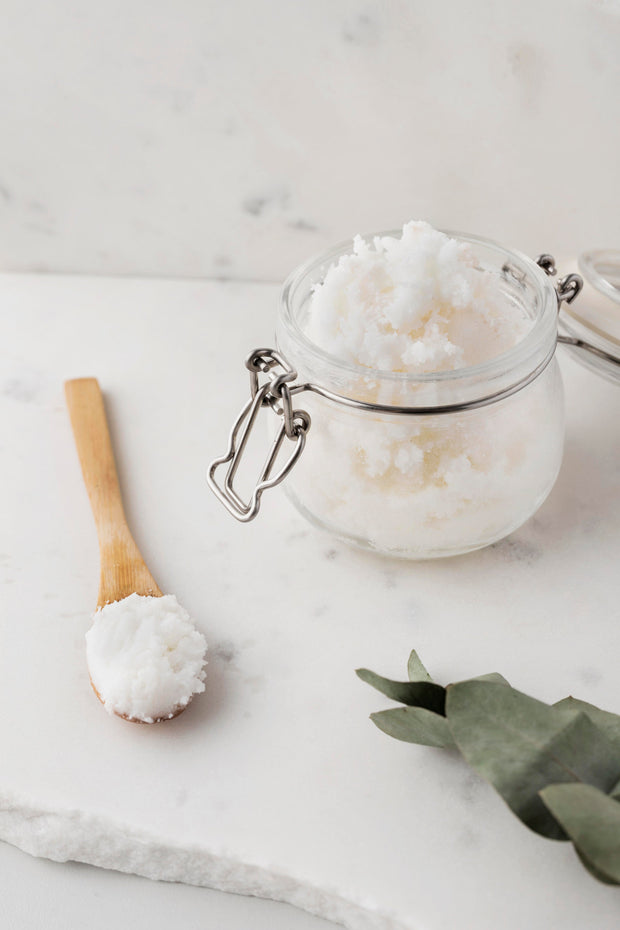
Soy wax is a natural, plant-based candle wax made from hardened soybean oil with a melting point of 45-55 degrees C. It is ideal for container candles in glass jars and is the most beginner-friendly DIY candle wax: low soot, excellent scent throw, and biodegradable. For your first candle you need soy wax, a wick, a container, and optionally a fragrance oil - ready to light after 24-48 hours curing.
Warum Sojawachs?
Soy wax has transformed DIY candle making over the past decade. It is plant-based, burns cleanly, and is easy to work with even without professional equipment. You know exactly what is in it. No paraffin, no unknown additives - just pure wax, a wick, and optionally a little fragrance. That is the principle behind Woodflame: raw materials you can trust.
Plant-based - Made from soybeans, not petroleum. Biodegradable and renewable. Clean burn - Significantly less soot than paraffin - better for indoor air quality. Longer burn time - Up to 50% longer than comparable paraffin candles. Better scent throw - Fragrance released at lower temperature - more even and longer-lasting. Easy to work with - Melting point between 46 and 54 degrees C. Forgiving and easy to clean up.
Good to Know: Soy wax is biodegradable and made from a renewable resource. No petrochemical residues are released during burning.
Sojawachs vs. Paraffin
Most commercial candles are made from paraffin - not because it is better, but because it is cheaper to produce. For your first candle and for everyday use, soy wax is the clearer choice.
Feature
Soy Wax
Paraffin Wax
Origin
Natural (soybeans)
Petroleum-based
Burn Quality
Clean, minimal soot
Can produce black soot
Burn Time
30-50% longer
Shorter burn time
Sustainability
Renewable & biodegradable
Non-renewable resource
Beginner Friendliness
Very beginner-friendly
Moderate difficulty
Materialien – Grundausstattung
One of the biggest surprises when you first make candles: you really do not need much. Most items you already have at home. Soy wax pastilles - For a 200 ml jar you need approx. 150-160 g. Cosmetic-grade. Cotton wick with metal base - Matching the diameter of your jar Fragrance oil (optional) - Up to 50% longer than comparable paraffin candles. Double boiler or pour jug- To melt wax without direct heat. Kitchen scale - Always weigh, never estimate Glass container - Heat resistant glass, 200-300 ml capacity. Mason jars work perfectly. Thermometer - A digital kitchen thermometer. Temperature is the decisive factor
Pro Tip :
Start with just one candle, not twenty. 200-250 g of wax and one jar is plenty to start.
Materialien – Optional
Pour jug with handle - What soy wax is and why it is so suitable for beginners Hair dryer or heat gun- To smooth small surface imperfections Labels - If you want to gift the candle.
Schritt für Schritt
The process takes about 30 minutes of active time plus 4-6 hours cooling and 48-72 hours curing.
1
Prepare your container
Clean the jar and let it dry completely. Thread the wick through the holder and place it across the jar so the wick hangs centred. A wick sticker at the base keeps the wick firmly in place.
2
Weigh and melt the soy wax
Weigh your soy wax. For a 200 ml jar you need 150-160 g. Melt in a double boiler and heat to 75-80 degrees C.
Important: Never exceed 85 degrees C. Too much heat alters the wax structure and reduces scent throw.
3
Add fragrance oil
Let the wax cool to 65-70 degrees C. Only then add the fragrance oil. For 150 g of wax that is 9-12 ml. Stir gently for 2 minutes.
4
Pour into the jar
Let the wax cool further to 55-60 degrees C before pouring. Pour slowly and evenly, keeping the wick centred. Do not move the jar afterwards.
5
Cool and cure
Let the candle cool at room temperature - no fridge, no freezer. After 4-6 hours the candle is set. Trim the wick to 5 mm.
Important: The 48-72 hour curing time is not optional. A candle lit too early will smell noticeably weaker.
Häufige Fehler
Pouring too hot
Always wait until 55-60 degrees C
Adding fragrance too early
Above 70 degrees C the scent evaporates before it can bind.
Skipping the cure time
48-72 hours make the difference.
Profi-Tipps
Always use a thermometer
Temperature is the one variable you can truly control.
Keep a candle log
Note wax quantity, fragrance percentage and pour temperature for every batch.
Always make at least two candles
One to test, one to keep or gift.
Do not overdo the fragrance
6-8% is optimal. Above 10% the fragrance sweats out of the wax..
Woodflame Tip:
Without a full melt pool, tunneling forms permanently.
Häufig gestellte Fragen
A 200 ml candle with 150 g of soy wax burns approximately 40-50 hours. Soy wax burns up to 50% longer than paraffin because of its lower melting point.
A 200 ml candle with 150 g of soy wax burns approximately 40-50 hours. Soy wax burns up to 50% longer than paraffin because of its lower melting point.
A 200 ml candle with 150 g of soy wax burns approximately 40-50 hours. Soy wax burns up to 50% longer than paraffin because of its lower melting point.
A 200 ml candle with 150 g of soy wax burns approximately 40-50 hours. Soy wax burns up to 50% longer than paraffin because of its lower melting point.
Fazit
You now have everything you need. The rest you learn by doing. All raw materials for this recipe are available in the Woodflame Shop.
About The Author
Nicolas R.
Nicolas R. is a product developer at Woodflame and a passionate DIY enthusiast. His focus is on candle craft - from wax selection to the right wick size. He writes about raw materials, processing techniques and everything you need to know to make great candles at home.
Related Articles
Kerzen
May 23, 2026
How to Make Your Candles with Soy Wax Complete Instructions
Introduction
Want to pour your first soy wax candle but not sure where to start?
This step-by-step guide covers everything a beginner needs —
from choosing materials to avoiding the most common mistakes.
Learning how to make soy candles at home is easier than most people expect.
Soy wax melts at a low temperature, burns cleanly, and works well with
basic kitchen equipment. All raw materials are in the Woodflame shop.
What soy wax is and why it is so suitable for beginners
The complete materials list - what you need and what is optional
A step-by-step guide for your first container candle
The most common mistakes and how to avoid them
Introduction
Want to pour your first soy wax candle but not sure where to start?
This step-by-step guide covers everything a beginner needs —
from choosing materials to avoiding the most common mistakes.
Learning how to make soy candles at home is easier than most people expect.
Soy wax melts at a low temperature, burns cleanly, and works well with
basic kitchen equipment. All raw materials are in the Woodflame shop.
What soy wax is and why it is so suitable for beginners
The complete materials list - what you need and what is optional
A step-by-step guide for your first container candle
The most common mistakes and how to avoid them
Introduction
Want to pour your first soy wax candle but not sure where to start?
This step-by-step guide covers everything a beginner needs —
from choosing materials to avoiding the most common mistakes.
Learning how to make soy candles at home is easier than most people expect.
Soy wax melts at a low temperature, burns cleanly, and works well with
basic kitchen equipment. All raw materials are in the Woodflame shop.
What soy wax is and why it is so suitable for beginners
The complete materials list - what you need and what is optional
A step-by-step guide for your first container candle
The most common mistakes and how to avoid them
Introduction
Want to pour your first soy wax candle but not sure where to start?
This step-by-step guide covers everything a beginner needs —
from choosing materials to avoiding the most common mistakes.
Learning how to make soy candles at home is easier than most people expect.
Soy wax melts at a low temperature, burns cleanly, and works well with
basic kitchen equipment. All raw materials are in the Woodflame shop.
What soy wax is and why it is so suitable for beginners
The complete materials list - what you need and what is optional
A step-by-step guide for your first container candle
The most common mistakes and how to avoid them


 Kerzen